
Two layers of the exception. Approved. Defeated. Enrolled.
Puerto Rico's constitution carries the punishment exception in Article II, Section 12. Puerto Rico can amend that section by its own process. Beneath it sits a federal layer the island cannot touch: the Thirteenth Amendment and the Jones Act's exception, which only Congress can remove. And the text Section 12 carries is not the text the Constitutional Convention approved. Two texts of Article II, Section 12 are in the record. They are not the same text.
"No existirá la esclavitud, ni forma alguna de servidumbre involuntaria salvo la que pueda imponerse por causa de delito, previa sentencia condenatoria."
Neither slavery nor any form of involuntary servitude shall exist, save that which may be imposed for crime after conviction. The exception is no longer confined to labor. It reaches the whole prohibition.
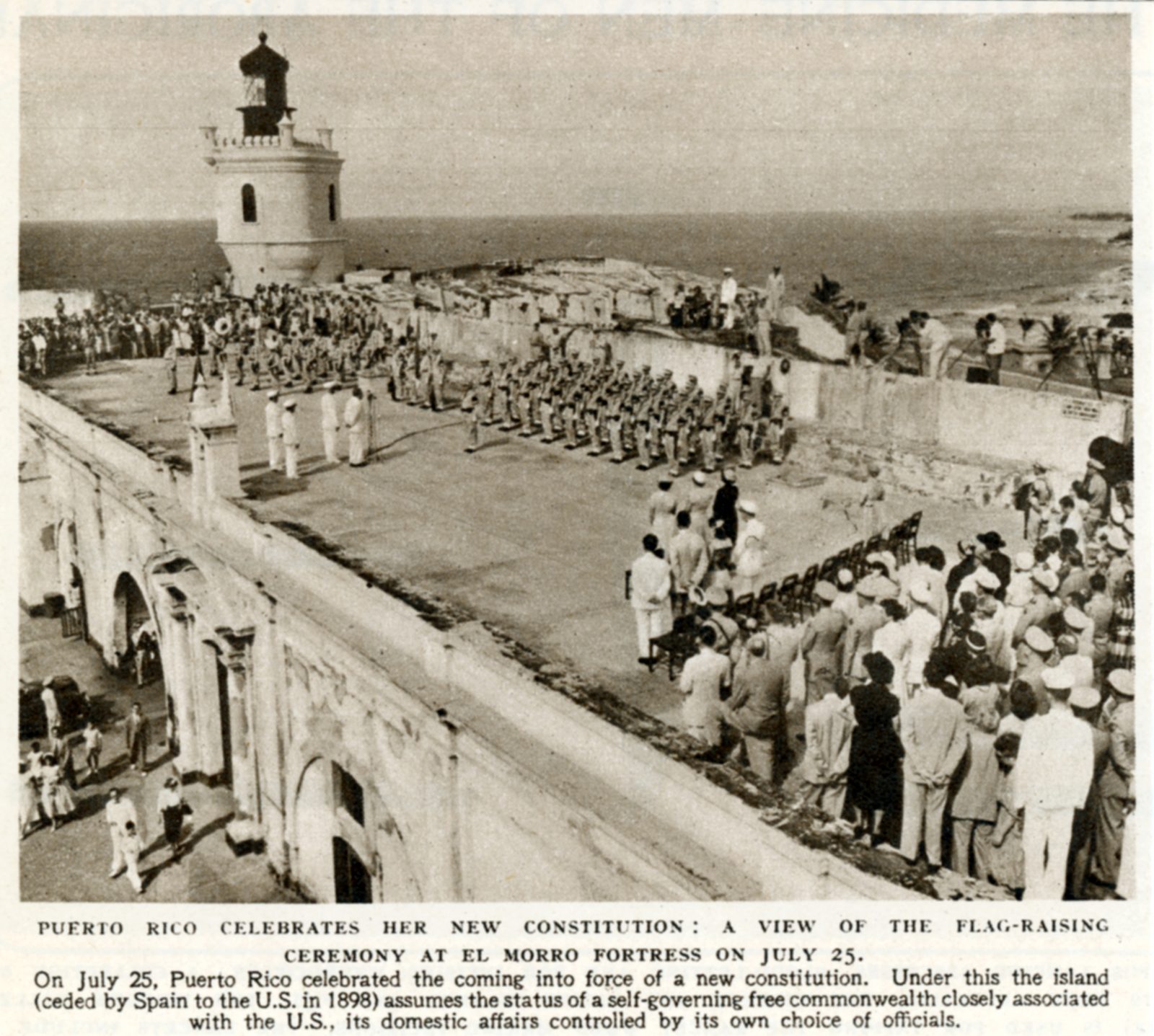
El Morro, July 25, 1952. The Constitution takes effect with Section 12 in the enrolled form, not the form the Convention approved. Fifty-four years to the day after the invasion.
Published 1952. Public domain.Three texts. One vote. One substitution.
The floor vote controls. The Convention enrolled what it approved on the floor, or it was supposed to. Read the three texts in order.
What the Convention voted for.
"No existirá la esclavitud ni el trabajo involuntario salvo este último como consecuencia de delito público luego de mediar sentencia condenatoria."
First reading, Diario de Sesiones p. 1341. Put to the floor at second reading and approved, p. 1959.
Neither slavery nor involuntary labor shall exist, save the latter as a consequence of crime after conviction. The masculine "este último" ties the exception to labor and to nothing else. Slavery is barred without qualification.
What the Convention voted down.
"No existirá la servidumbre involuntaria excepto como castigo por la comisión de delito público, luego de mediar sentencia condenatoria."
Delegate Veray's substitute, second reading, Diario de Sesiones pp. 1958 to 1959. Defeated by recorded vote.
Veray moved to drop "esclavitud" as antiquated and build the clause on "servidumbre involuntaria." Delegate Benítez opposed him on the definition: slavery, he said, reaches "cualquier otro sometimiento de unas personas a la voluntad y al poder de otros," any subjection of persons to the will and power of others. The status, in a framer's mouth. The amendment was defeated.
What the constitution says.
"No existirá la esclavitud, ni forma alguna de servidumbre involuntaria salvo la que pueda imponerse por causa de delito, previa sentencia condenatoria."
Third reading and enrollment, Diario de Sesiones p. 3035. The operative Spanish text today.
"Servidumbre involuntaria," the defeated term, is in the enrolled text. The feminine "la que" replaces "este último," and the exception is no longer confined. The change was made after the decisive vote and before enrollment. No located document discloses it.
The official English, the version Congress approved and put before the world, forbids penal slavery on its face. The operative Spanish does not. The monograph traces the text through referral, the enrollment window, and adoption, and states what follows for the exception in Puerto Rico. Read it.
The exception entered by act of Congress.
The Jones Act, Section 2: "Slavery shall not exist in Porto Rico. Involuntary servitude, except as a punishment for crime, whereof the party shall have been duly convicted, shall not exist in Porto Rico." Slavery in a sentence of its own, with no exception. The exception placed with servitude. The exception enters Puerto Rico here, by federal statute, thirty-five years before the substitution.
The Convention approves a text that confines the exception to labor. The enrolled constitution carries a different text. The exception now reaches the whole prohibition.
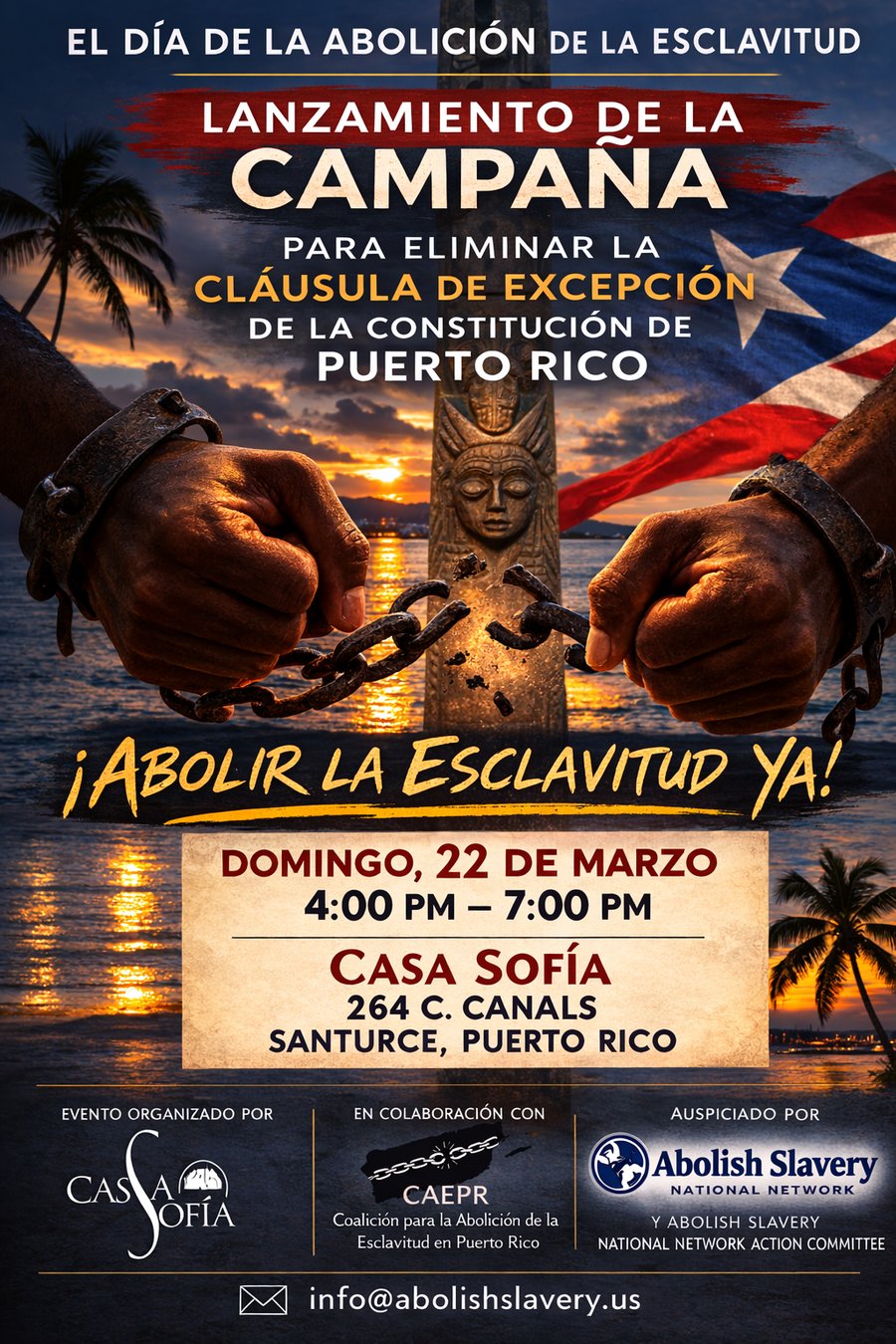
El Día de la Abolición de la Esclavitud. The campaign to remove the exception from Section 12 opens at Casa Sofía, 264 Calle Canals, Santurce, organized by Casa Sofía with CAEPR and sponsored by the network and its Action Committee.
Puerto Rico may amend Section 12 by its own process and remove the exception from its constitution, as eight states have done with theirs. What no vote in Puerto Rico can remove is the federal layer beneath it: the Thirteenth Amendment and the Jones Act of 1917. That layer belongs to Congress.
Disclosure absent. Under Rule 70 of the Rules of Criminal Procedure, no person pleading guilty in Puerto Rico is told that conviction suspends the protection against slavery. The only scripted collateral-consequence warning is the immigration warning of Rule 72. The formal notice that starts the clock has not yet been delivered.
On June 22, 2026 the network submitted its Puerto Rico scorecard to the United Nations Special Committee on Decolonization as an annex to its monograph, as Petitioner No. 230. The scorecard is in the Committee's hands. The audit runs on two axes that are never blended: ownership of the body, and subordination of the territory. Puerto Rico fires the territorial axis against the United States, and it fires it because the same structure that imposed the exception protects it.
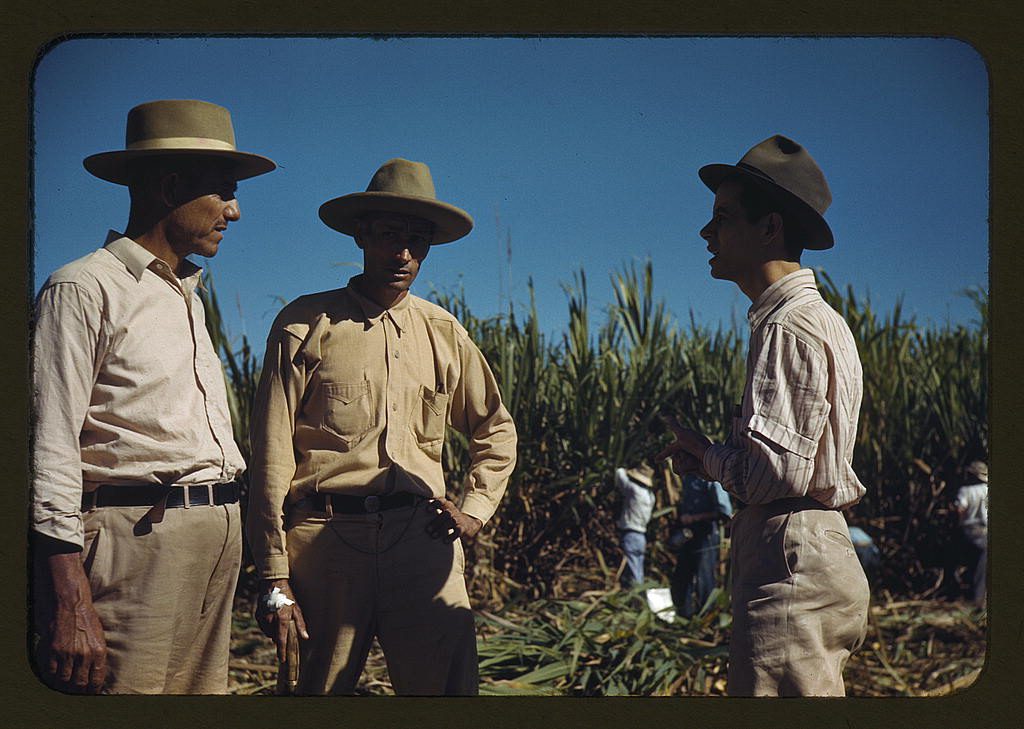
Sugar cane workers, vicinity of Río Piedras, December 1941. Eleven years before the Convention, under the Jones Act's exception, which is still in force.
Jack Delano, Farm Security Administration. Library of Congress. Public domain.The colony is the limiting case.
Set Puerto Rico against Nevada. Nevada wrote the exception into its 1864 constitution and removed it by ballot in 2024, and with it the last exception that governed its prisons. Puerto Rico can take the same vote on Section 12. The difference is what remains afterward: the federal exception, installed by Congress in 1917 and still in force, which no vote on the island reaches. The clause was installed at each frontier as an instrument of territorial governance, and it persists longest where the territorial subordination persists.
Three instruments, one record: the territory cannot lawfully reach the exception imposed on it; persons convicted are never told the status consequence applies; and the powers of ownership are exercised on the State's own written rules. The measure is status, never race.
Abolición ahora.
Organizers, legislators, and attorneys in Puerto Rico get the record written for each. Write with your role.
Cite this page. Abolish Slavery National Network, “Puerto Rico,” https://abolishslavery.us/puerto-rico.html.