years older than the amendment.
The exception's words were written in 1787 for the Northwest Territory. The Thirteenth Amendment copied them in 1865.

The words most Americans think were written in 1865 were written seventy-eight years earlier, for a territory. This page follows them from there to the ballot box, with the document at every step.
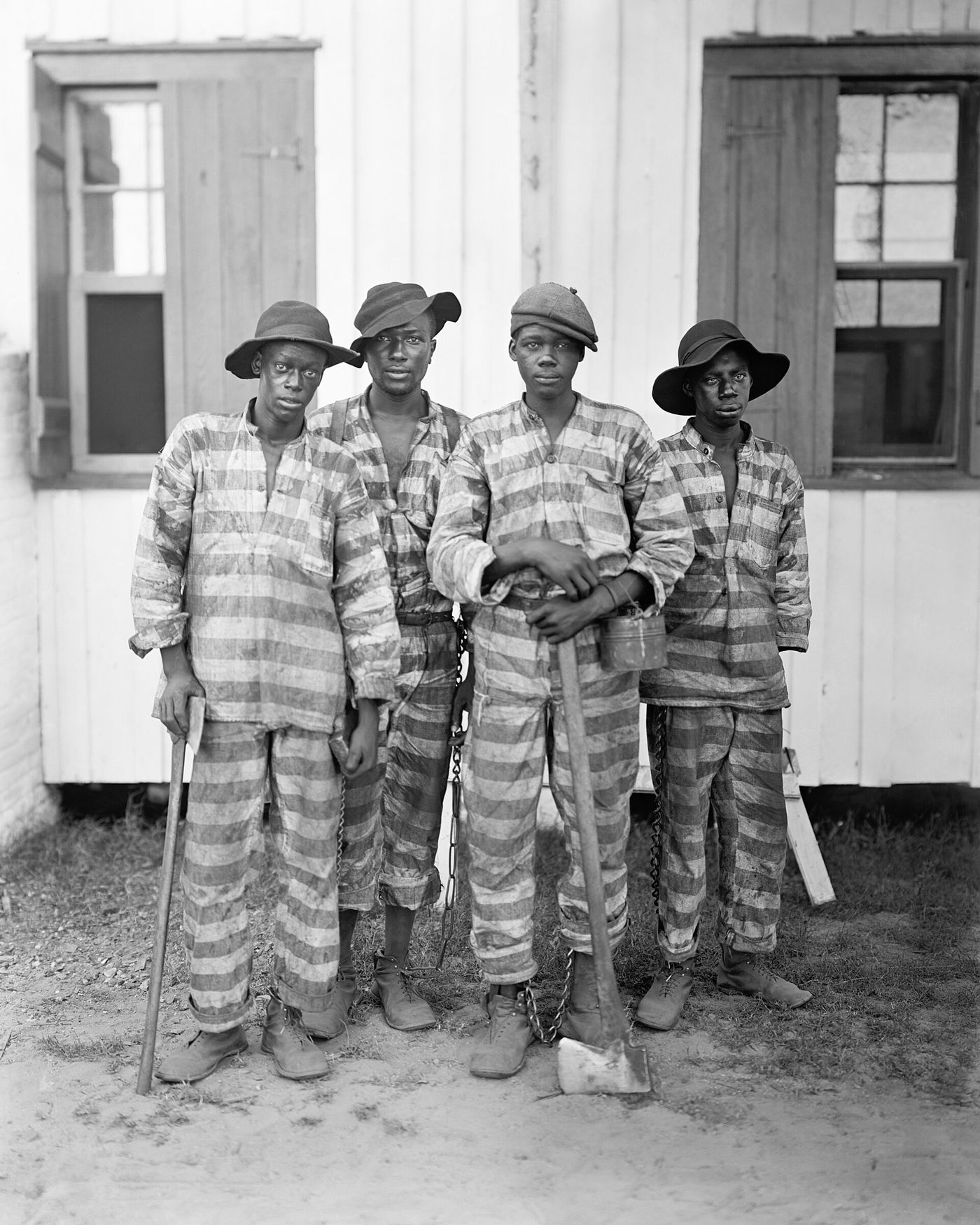
"A Southern chain gang," about 1903. Sold as a stereograph. By then the exception was 116 years old and the lease was the South's public works department.
Detroit Publishing Co. Library of Congress. Public domain.Twelve facts about abolition and the exception clause, each read from the document linked beneath it.
The exception's words were written in 1787 for the Northwest Territory. The Thirteenth Amendment copied them in 1865.
"Slavery shall not be permitted in this state." Rhode Island, 1843. Still the text today.
The act that freed the District of Columbia wrote the exception into District law and let owners petition for compensation.
In 1866 the United States wrote the exception into treaties with the Cherokee, Choctaw, Chickasaw, Creek, and Seminole nations. The Cherokee had abolished slavery themselves in 1863.
The 1867 act abolished peonage "in the Territory of New Mexico and other Parts of the United States." The amendment had not done it.
The State's own archives: $2.1 million from the Convict Department in one year. Alabama kept the lease until 1928.
A state supreme court's own description of a convicted person. The phrase has never been retracted in those terms.
Slavery is a status, defined by the powers of ownership exercised over a person. The definition has been binding on the United States for ninety-seven years.
The U.S. Department of Labor published every state's prison labor laws in one bulletin, 150 pages, before the Second World War.
It is a federal crime to ship goods made by prisoners across state lines. Penalty: up to two years. The law exempts farm goods, goods made for government use, and other listed cases.
Puerto Rico's Convention approved one Section 12. A different Section 12 was enrolled and took effect. The vote is in the record.
No plea form the network has audited tells the defendant that conviction suspends the protection against slavery. New Jersey's lists a thirty-dollar fee instead.
The Confederation Congress organized the territory north of the Ohio River. Article 6 of the Northwest Ordinance carried both the ban and the exception, in the words the Thirteenth Amendment would repeat. The free states carved from the territory copied it into their constitutions.
There shall be neither slavery nor involuntary servitude in the said territory, otherwise than in punishment of crimes, whereof the party shall have been duly convicted
Northwest Ordinance, Article 6, as re-enacted by the First Congress, 1 Stat. 50 (1789). Statutes at Large, govinfo.
Rhode Island's constitution of 1843 prohibits slavery outright. The sentence has not changed. It is the only state constitution in the enforcement group that never carried the exception.
Slavery shall not be permitted in this state.
Rhode Island Constitution, Article I, Section 4. Rhode Island on this site.
Dred Scott v. Sandford. The Court treated a human being as property under the Constitution. The Thirteenth Amendment answered the case eight years later.
The case, on this site. The opinion (PDF).
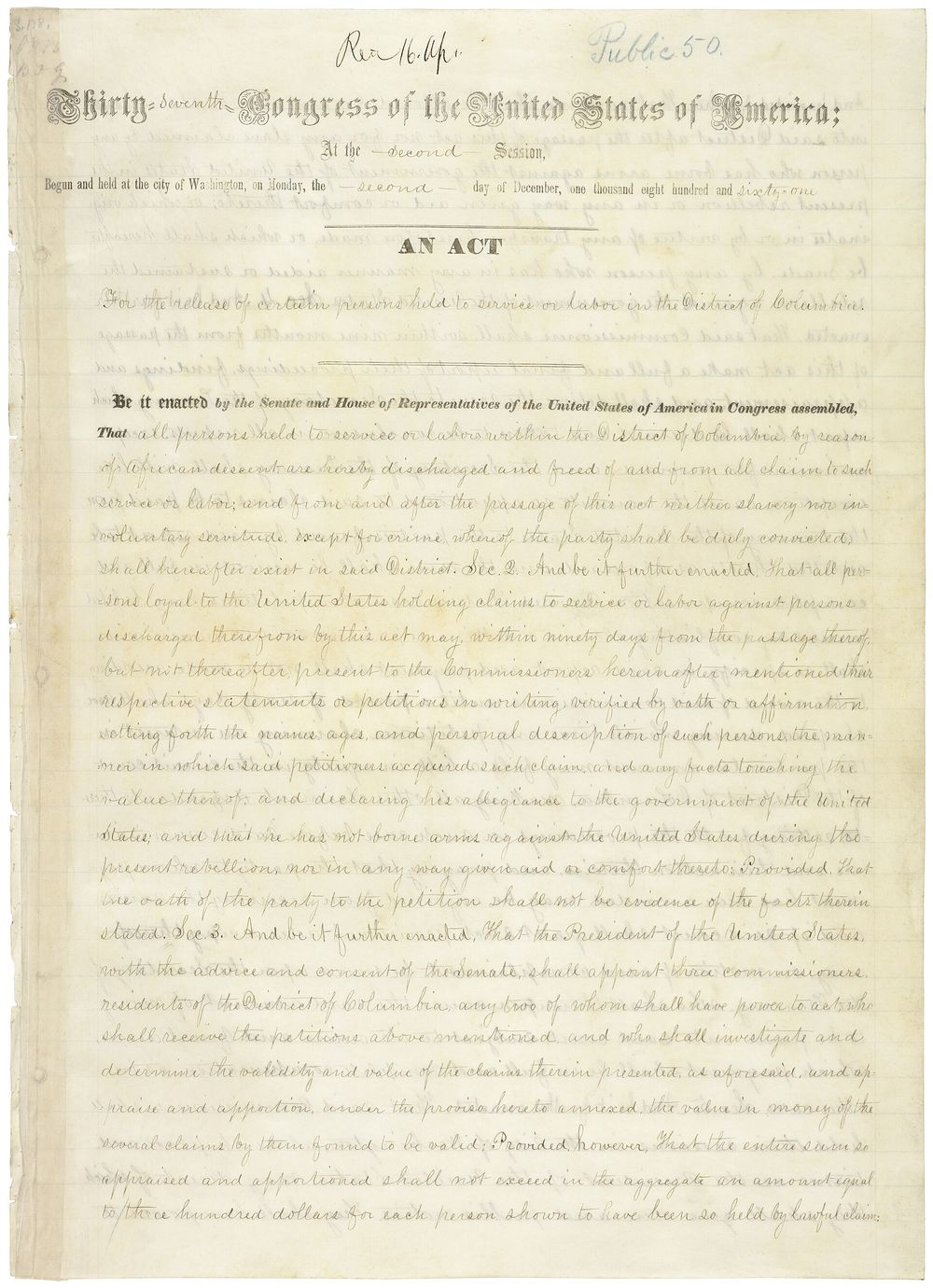
On April 16, 1862, Congress freed every person held in the District and let loyal owners petition commissioners for compensation. The same act wrote the exception into the District's law three years before the amendment.
neither slavery nor involuntary servitude, except for crime, whereof the party shall be duly convicted, shall hereafter exist in said District
An Act for the Release of certain Persons held to Service or Labor in the District of Columbia, 12 Stat. 376. Statutes at Large.
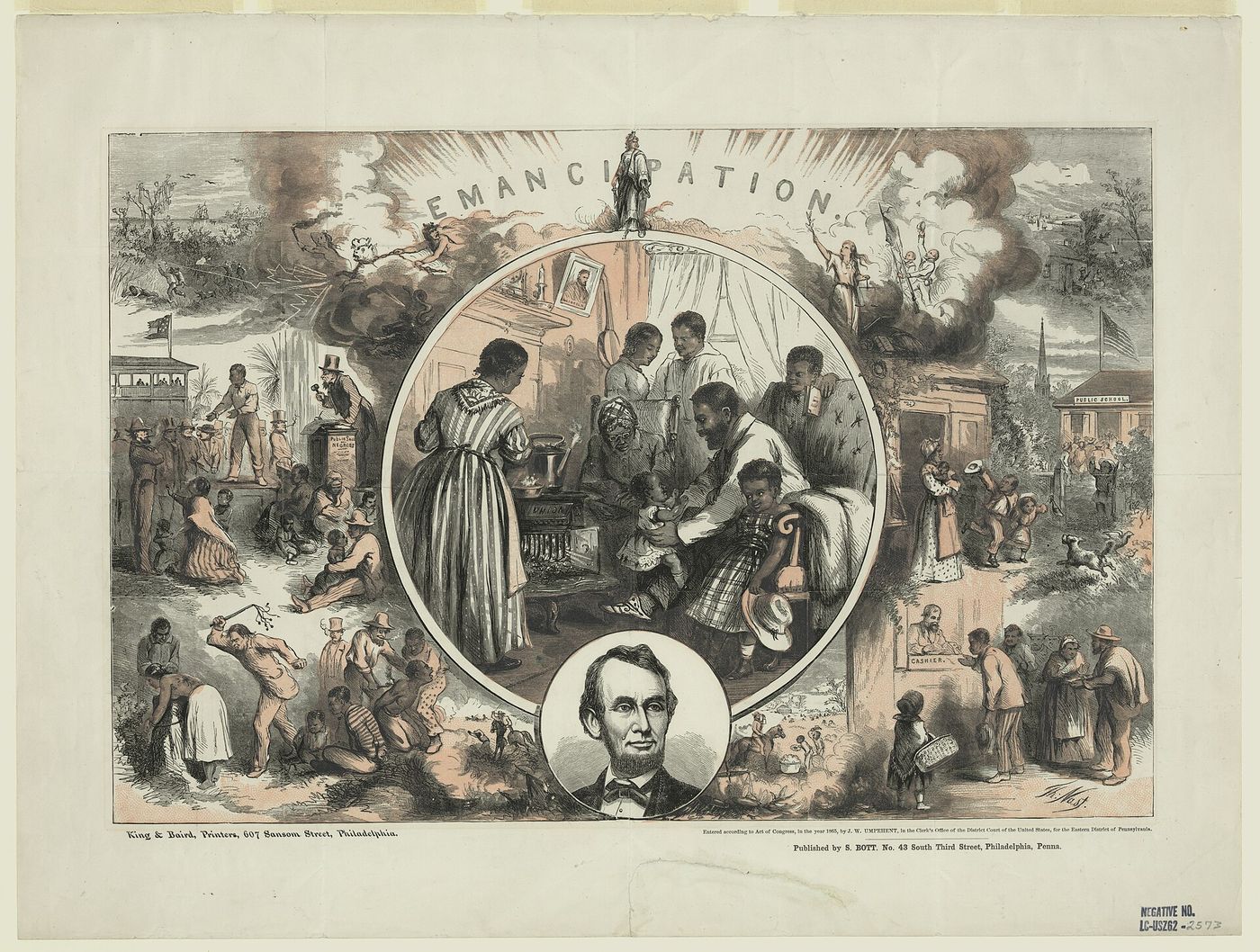
Section 1 abolishes slavery and involuntary servitude in the United States with one exception. Section 2 gives Congress the power to enforce it.
Neither slavery nor involuntary servitude, except as a punishment for crime whereof the party shall have been duly convicted, shall exist within the United States, or any place subject to their jurisdiction.
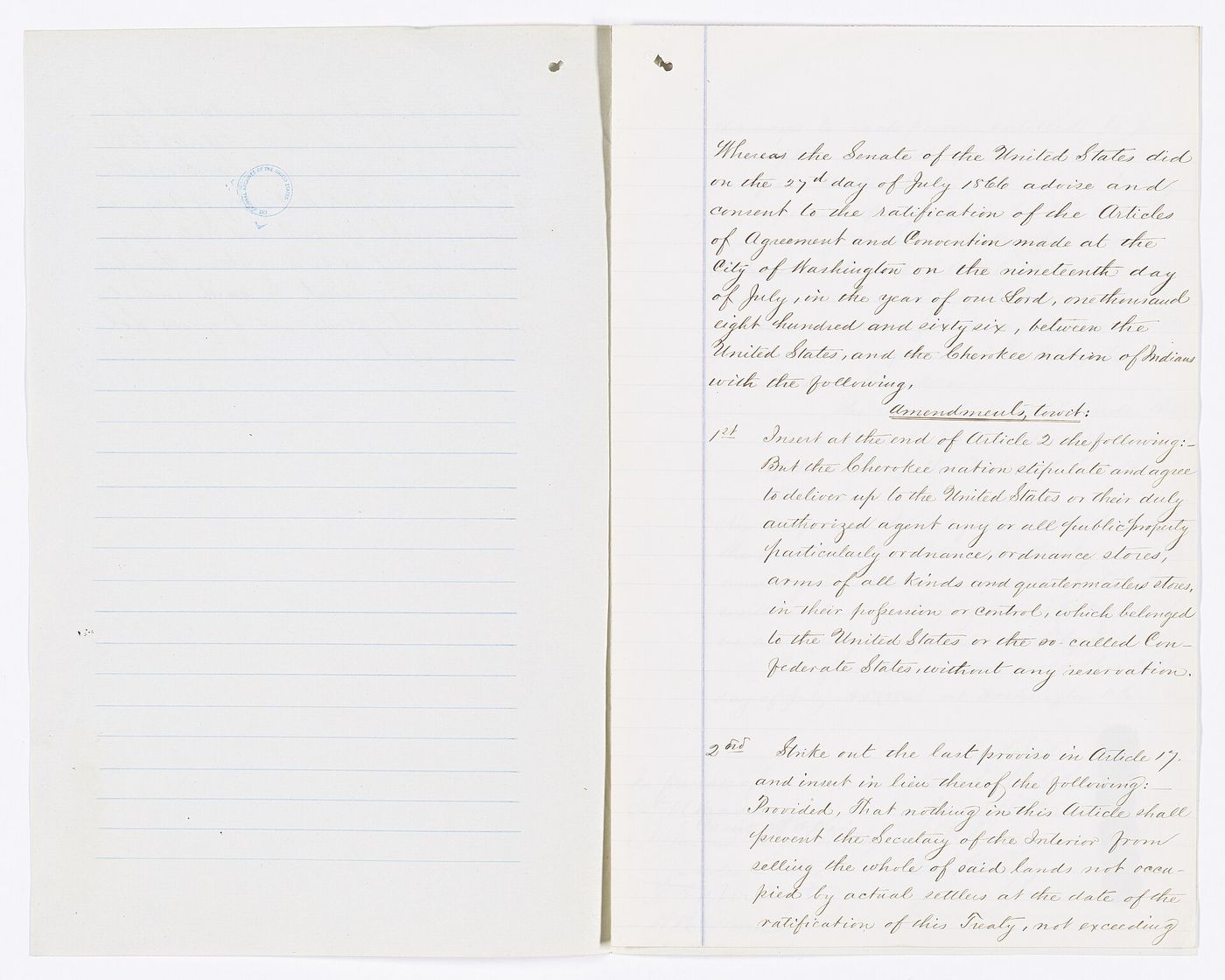
In one year, the Reconstruction treaties with the Cherokee, Choctaw, Chickasaw, Creek, and Seminole nations each installed the exception in nearly identical words. The Cherokee treaty recites that the Cherokee had already abolished slavery by their own national council in February 1863, and then installs the exception anyway.
never hereafter shall either slavery or involuntary servitude exist in their nation otherwise than in the punishment of crime, whereof the party shall have been duly convicted
Treaty with the Cherokee, Article 9, 14 Stat. 799 (1866). Statutes at Large.
Two years after the amendment, Congress found it necessary to declare peonage unlawful in New Mexico "and other parts of the United States" by statute. The amendment alone had not ended it.
An Act to abolish and forever prohibit the System of Peonage in the Territory of New Mexico and other Parts of the United States
14 Stat. 546, ch. 187 (March 2, 1867). Statutes at Large.
Ruffin v. Commonwealth, Virginia. The court said what the exception means in plain words. The phrase is still quoted because no court has taken it back in those terms.
He is for the time being the slave of the State. He is civiliter mortuus; and his estate, if he has any, is administered like that of a dead man.
In the Civil Rights Cases the Court struck down the Civil Rights Act of 1875, but it accepted that Congress may legislate against the badges and incidents of slavery. That phrase is the basis of the network's badges audit.
The State's own archives compiled the figures for the Legislature in 2021. In the peak year of 1918 the Convict Department transferred $2,115,019 to the treasury, 40.4 percent of the general fund. Most of the profit came from men leased to mines. Alabama did not end the lease until 1928.
Alabama Convict Labor Revenue and Demographics, 1896 to 1929, Alabama Department of Archives and History for the Legislative Services Agency, October 2021.
The Slavery Convention defines slavery as a status or condition, by the powers of ownership exercised over a person. The United States adhered on March 21, 1929, and acceded to the 1956 Supplementary Convention in 1967. It has never withdrawn from either.
the status or condition of a person over whom any or all of the powers attaching to the right of ownership are exercised
Slavery Convention, Article 1(1). The centennial, on this site.
The Department of Labor published Bulletin 596, Laws Relating to Prison Labor in the United States as of July 1, 1933, 150 pages, state by state. The map has been known to the federal government for ninety-three years.
The Constitutional Convention approved a Section 12 whose exception attached only to labor. The enrolled text, the one that took effect on July 25, 1952, carries an exception that reaches the whole prohibition. Two texts are in the record. They are not the same text.
Puerto Rico, on this site, with the monograph.
Amendment T, the first modern attempt to remove the exception by ballot, fell short in November 2016.
Amendment A passed on November 6, 2018. Nebraska and Utah followed in 2020; Alabama, Oregon, Tennessee, and Vermont in 2022; Nevada in 2024. Voters in Louisiana in 2022 and California in 2024 rejected the questions put to them.
Where we stand, with every state page and the official ballot documents.
Mortis v. Polis, Denver District Court, February 13, 2026. The first ruling to give a removal operational force. On September 15, 2026 the federal Abolition Amendment was introduced in the House with 59 original cosponsors.
Every document above is in the Research Library, with its citation. The full argument, with the five frontiers on which the clause was installed, is in The White Pages. The definition's own history is on The Centennial.
Cite this page. Abolish Slavery National Network, “History of the Punishment Exception, 1787 to Today,” https://abolishslavery.us/history.html.
You do not amend slavery. You abolish it.